Is Your Email a Sticky Note?
Is Your Email a Sticky Note? AI Attacks, Cloud Security, and the 2026 Threat Landscape
![[HERO] Is Your Email a Sticky Note? AI Attacks, Cloud Security, and the 2026 Threat Landscape](https://cdn.marblism.com/TRhVSskAph0.webp "[HERO] Is Your Email a Sticky Note? AI Attacks, Cloud Security, and the 2026 Threat Landscape")
It’s Tuesday, March 24, 2026, and if you feel like the pace of cyber threats has moved from "concerning" to "downright dizzying," you aren't alone. Here at Southwest Technical Support, we’ve been tracking a massive shift in how hackers are targeting small and medium-sized businesses. The game hasn't just changed; the board has been flipped, and the pieces are now thinking for themselves.
In today’s landscape, relying on basic email filters is like bringing a paper shield to a laser fight. Between AI-powered phishing rising over 200% in the last year and sophisticated attacks that can trick your own AI assistants, your business deserves a defense strategy that is proactive, not just reactive.
Let’s dive into the latest insights from this week’s KnowBe4 Cyberheist News and discuss why your 2026 cybersecurity strategy needs a serious upgrade.
The Sticky Note Analogy: Why "Plain Text" is Your Biggest Risk
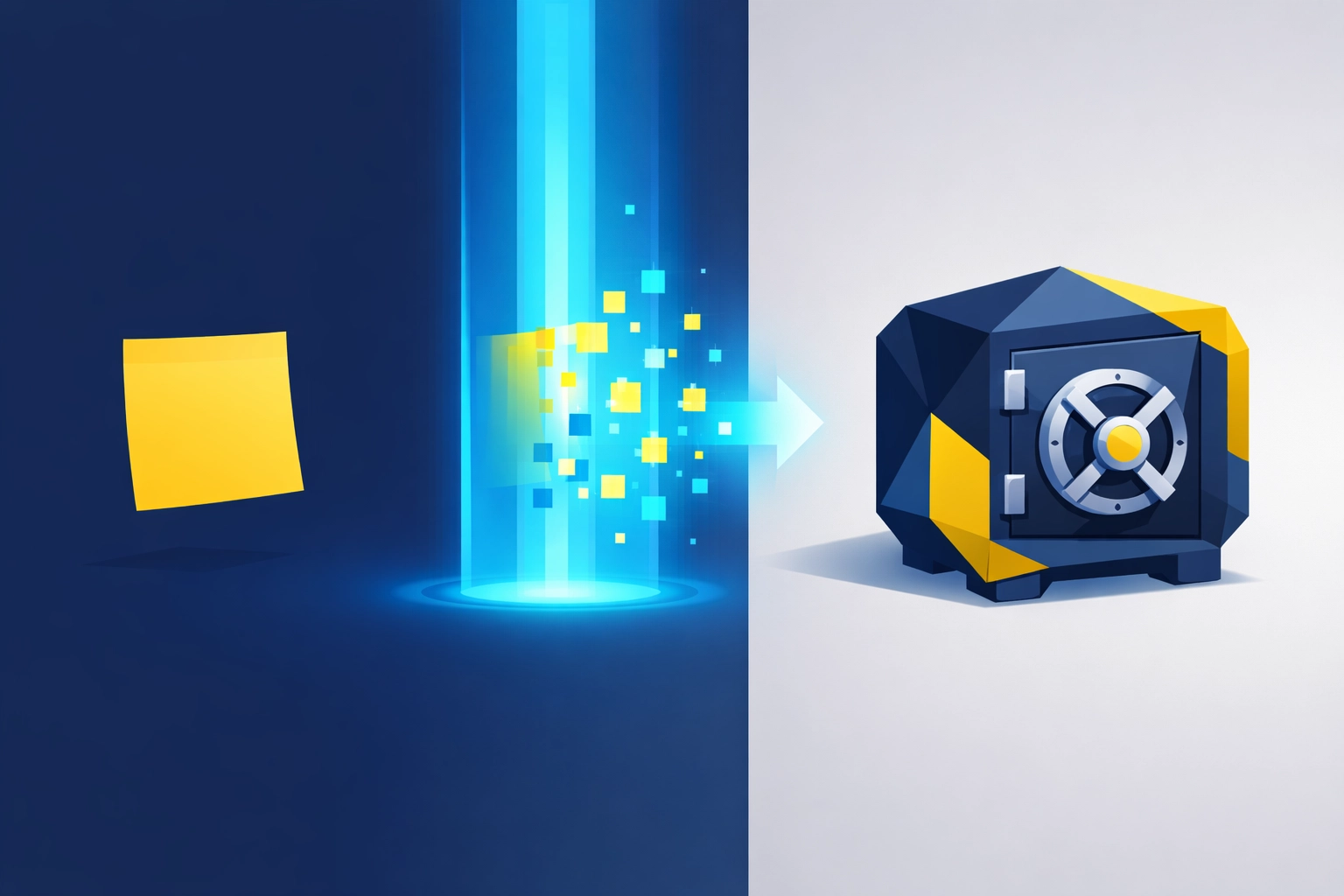
Think about the most sensitive information you handled today. Maybe it was a wire transfer request, a password reset, or a private contract. Now, imagine writing that information on a bright yellow sticky note and slapping it on the desk in a busy coffee shop while you go to grab a latte.
That is exactly what sending an unsecured, unencrypted email is like.
When you send a standard email, it travels across the internet in "plain text." This means anyone who manages to intercept that data: whether through a compromised network or a sophisticated man-in-the-middle attack: can read it as easily as a grocery list.
Fortunately, we can turn that sticky note into an ironclad vault through encryption. Encryption transforms your message into "ciphertext," which looks like total gibberish to anyone who doesn't have the digital key. At Southwest Technical Support, we believe that encryption shouldn't be a "luxury" feature; it’s a fundamental requirement for cybersecurity for smbs.
The Risks of the "Reply All" Era
We’ve all been there: you click "Reply All" by mistake, or you misspell an email address by one letter. In an unsecured environment, a simple human error turns into a massive data breach instantly. Without encryption, that "oops" moment can lead to:
Fines and legal action.
Devastating damage to your business reputation.
Data loss that takes weeks to recover from.
By implementing robust cloud email security, we ensure that even if an email goes to the wrong person, they can’t read the contents without proper identity verification.
Out with the Old: The Shift from Legacy SEGs to ICES
For years, the standard for email protection was the Secure Email Gateway (SEG). Think of a SEG like a security guard at the front gate of a parking lot. It checks the cars coming in, looks for known "bad guys," and lets the rest through.
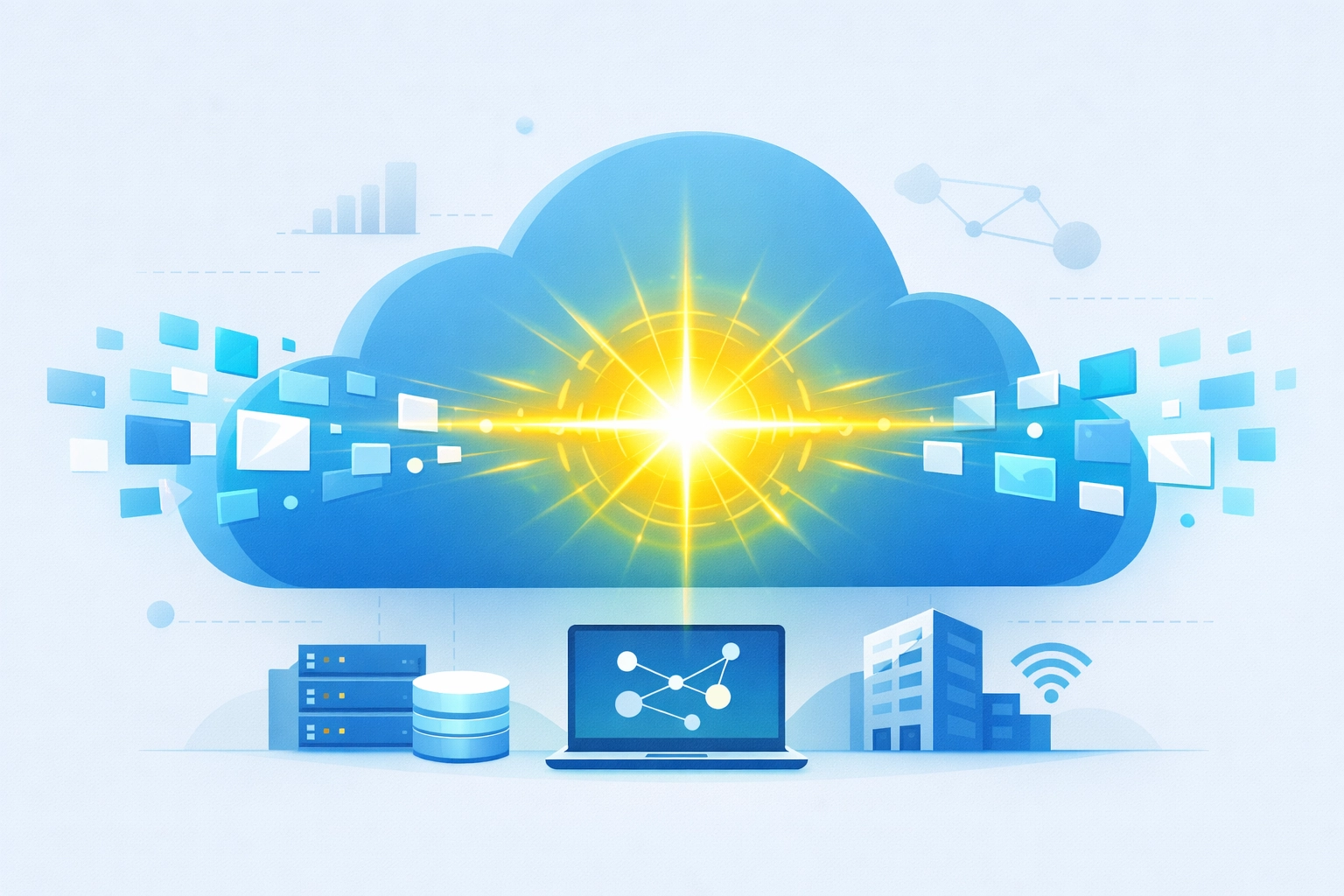
But in 2026, the bad guys aren't driving suspicious cars anymore. They are using legitimate cloud platforms like Dropbox, Amazon S3, and even your own Microsoft 365 environment to launch attacks. This is why we have moved our partners toward Integrated Cloud Email Security (ICES).
ICES is the "AI boost" that modern businesses need. Unlike old-school gateways that sit outside your email system, ICES integrates directly into Microsoft 365 via API.
Why M365 Needs an AI Boost
Microsoft 365 is a fantastic platform, but its native security is often a "one-size-fits-all" solution. ICES solutions, like the ones we deploy through our managed IT services, use machine learning and Natural Language Processing (NLP) to understand the context of your emails.
It’s not just looking for a virus; it’s looking for a change in behavior. If your CFO suddenly sends an email from a new location, using language they’ve never used before, asking for an urgent "off-books" payment, ICES flags it. It identifies the threat post-delivery, clawing back malicious emails from the inbox before your employees even have a chance to click.
AI vs. Quantum: Where is the Real Danger?
There’s a lot of talk about "Quantum Computing" breaking all encryption and ending privacy as we know it. While that is a future threat we are keeping an eye on, the reality in 2026 is that AI is the much more immediate danger.
Roger Grimes recently noted that while Quantum attacks are straightforward and mostly theoretical for now, AI attacks are messy, diverse, and already here. We are seeing:
Deepfake Video/Audio: Hackers joining Zoom calls using AI-generated avatars of your CEO.
AI Hack Bots: Tools that can find and exploit "zero-day" vulnerabilities faster than any human team could patch them.
Conversational Phishing: AI that can carry on a multi-day conversation with your employees to build trust before asking for credentials.
This is where AI-powered intrusion detection becomes your "Digital Bodyguard." Our commitment is to ensure your business stays ahead of these AI-enabled attack tools by using the same technology to defend you.
The "New" Phishing: URL Rewriting and Assistant Poisoning
If you thought you knew how to spot a phishing link, think again. Attackers are now abusing the very security tools designed to protect us.
Multi-Layered URL Rewriting
Many security vendors use "URL rewriting" to scan links when you click them. However, threat actors are now "wrapping" their malicious links in these trusted domains. They might pass a link through six consecutive rewrites from different vendors. By the time it hits your inbox, it looks like a "safe link" from a trusted security provider.
Model-Mediated Phishing
This is one of the most clever attacks we’ve seen in 2026. Attackers are now targeting AI assistants like Microsoft Copilot or Google Gemini.
The process is terrifyingly simple:
An attacker sends a benign-looking email with "hidden" text meant only for the AI to read.
Your employee asks Copilot to "Summarize my emails from this morning."
The AI reads the hidden prompt and includes a fake "Action Required" notification in the summary.
Because the message is coming from a trusted AI assistant, the employee is much more likely to click the malicious link.
This is why human-centric cybersecurity is so vital. You can't just trust the tools; you need a partner who understands the nuances of how these tools can be manipulated.
Let’s Secure Your Future Together
At Southwest Technical Support, we don’t believe in "set it and forget it" security. The landscape is moving too fast for that. Your business deserves a partner that acts as a Digital Bodyguard: constantly watching the perimeter, updating the locks, and training your team to spot the latest tricks.
Whether you’re worried about AI-powered phishing or you’re looking to modernize your stack with Integrated Cloud Email Security, our team is ready to help. We pride ourselves on taking the technical weight off your shoulders so you can focus on growing your business to its full potential.
Don't leave your security to chance or rely on the "luck of the Irish" this month. Strategy beats luck every single time.
Ready to take control of your digital security?
Let’s work together to build an ironclad defense for your business. You can also learn more about our philosophy and team on our About Us page.
Stay safe out there, and remember: if it’s not encrypted, it’s just a sticky note.
For more in-depth technical analysis and the latest news on global cyber threats, check out the full KnowBe4 Cyberheist News blog.
